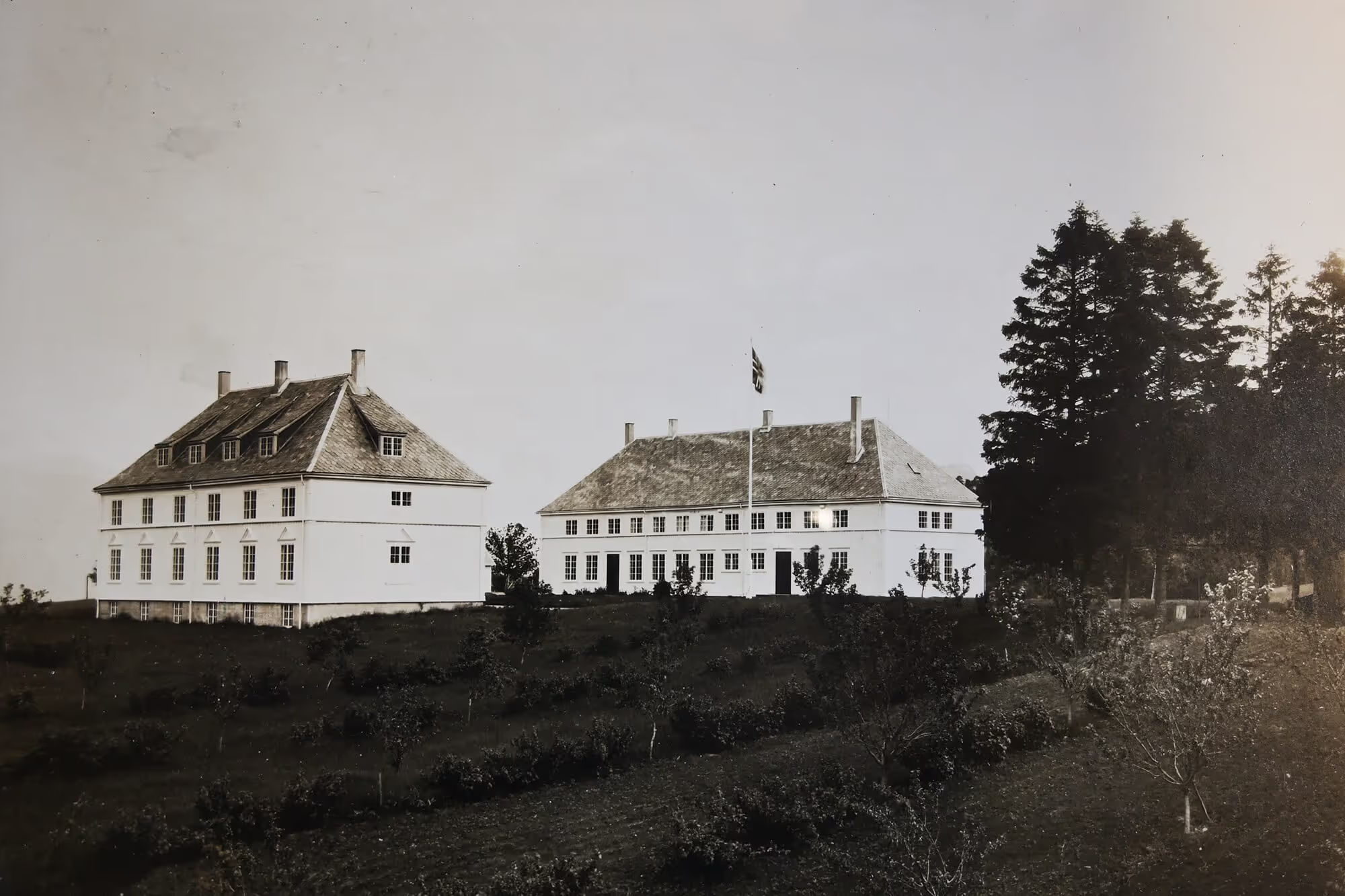
Ryfylke folkehøgskule (a Norwegian residential folk high school) was founded in 1912 on the island of Ombo. The following year the school moved to Sand. After two years at Ungdomstunet and five years in the old school building by the fjord in Sand, the folkehøgskule was finally able to move into its own buildings in 1920. The new school site was given the name Rygjatun.
For 80 years, generations of folkehøgskule students filled these buildings. There was one interruption during the final year of the Second World War, 1944–45. At that time, almost all folkehøgskular in Norway closed after German plans for forced mobilisation of young people were uncovered.
The memorial stone standing in the centre of the courtyard honours Bernhard Håvardsholm, who was headmaster in 1940. He became deeply involved in the resistance movement during the war. Håvardsholm managed to escape to England and joined the Norwegian resistance unit Kompani Linge. Several times he crossed the North Sea to organise resistance groups in Ryfylke and other parts of Norway. After completing a mission in November 1941, he attempted to return to Shetland aboard the vessel M/B Blia. The boat was lost at sea and everyone on board perished. Former students later raised the memorial stone in his honour.
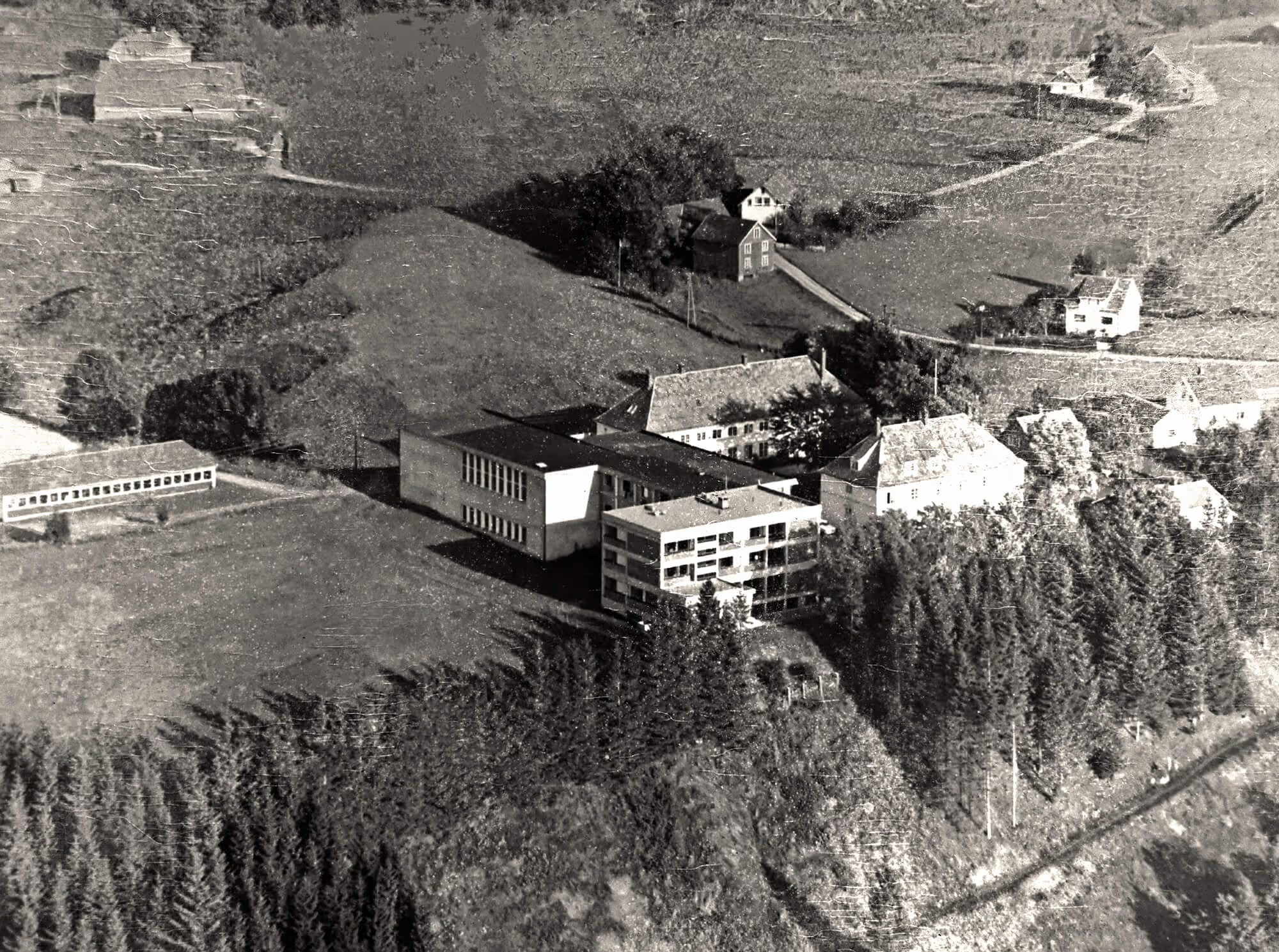
Student numbers at the folkehøgskule varied through the years. The school experienced its largest period of growth during the 1960s. At that time, Ryfylke folkehøgskule opened a brand new building that included a gymnasium, swimming pool, two large arts and crafts studios, classrooms, and a new residence wing.
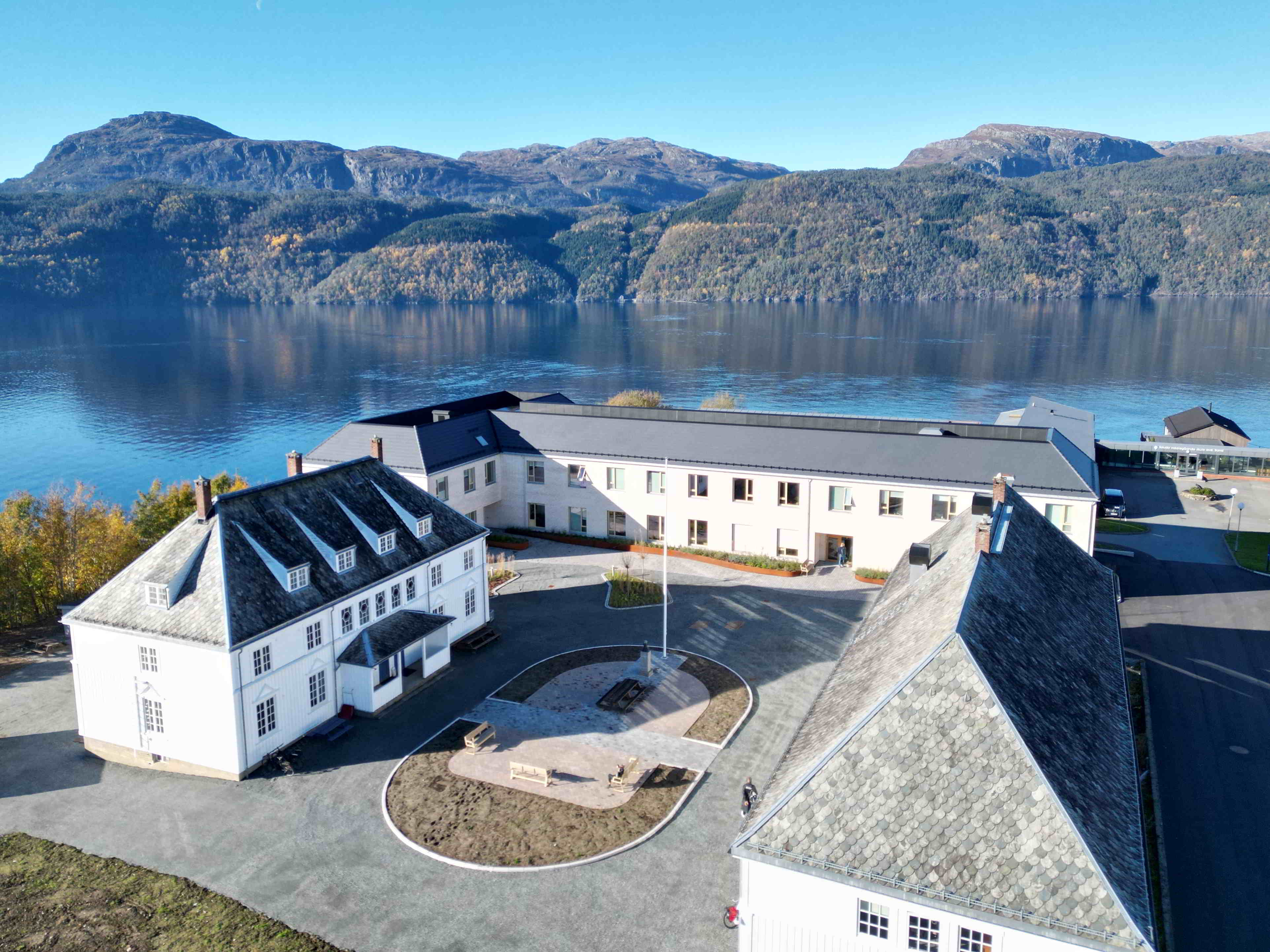
A few years later, in 1970, an additional building was added with another residence wing, teachers’ housing, a library, and a fireplace lounge. In the 1990s another residence building was constructed, long known as “the new residence”. The buildings from the 1960s and 1970s have now become history. They were replaced by new and modern buildings that were completed and taken into use in 2025.
“Even though much is new, it is rooted in the same soil.”
After the expansion in 1964, the school became an important sports centre for the local community. The folkehøgskule established a popular sports programme. In the gymnasium, the local club IL Sand played volleyball matches, helping make volleyball the most popular sport in Sand. The swimming group trained in the school pool, and many teams and organisations used the gym and pool for activities.
Rygjatun also served as the main cultural centre in Suldal before the municipality built its own cultural house. National touring institutions such as Riksteatret, Rikskonsertene, Riksgalleriet and the Folk Academy held events here. Rogaland Youth Association, the regional sports federation and many other organisations arranged courses and gatherings at Rygjatun. The school’s own celebrations and open events were also very popular.
Friends of the folkehøgskule were saddened when the school closed its doors in the year 2000. Today, however, they are delighted to see energetic and talented young people once again bringing life back to Rygjatun.
Ingvar Olimstad
Former teacher and headmaster at Ryfylke folkehøgskule